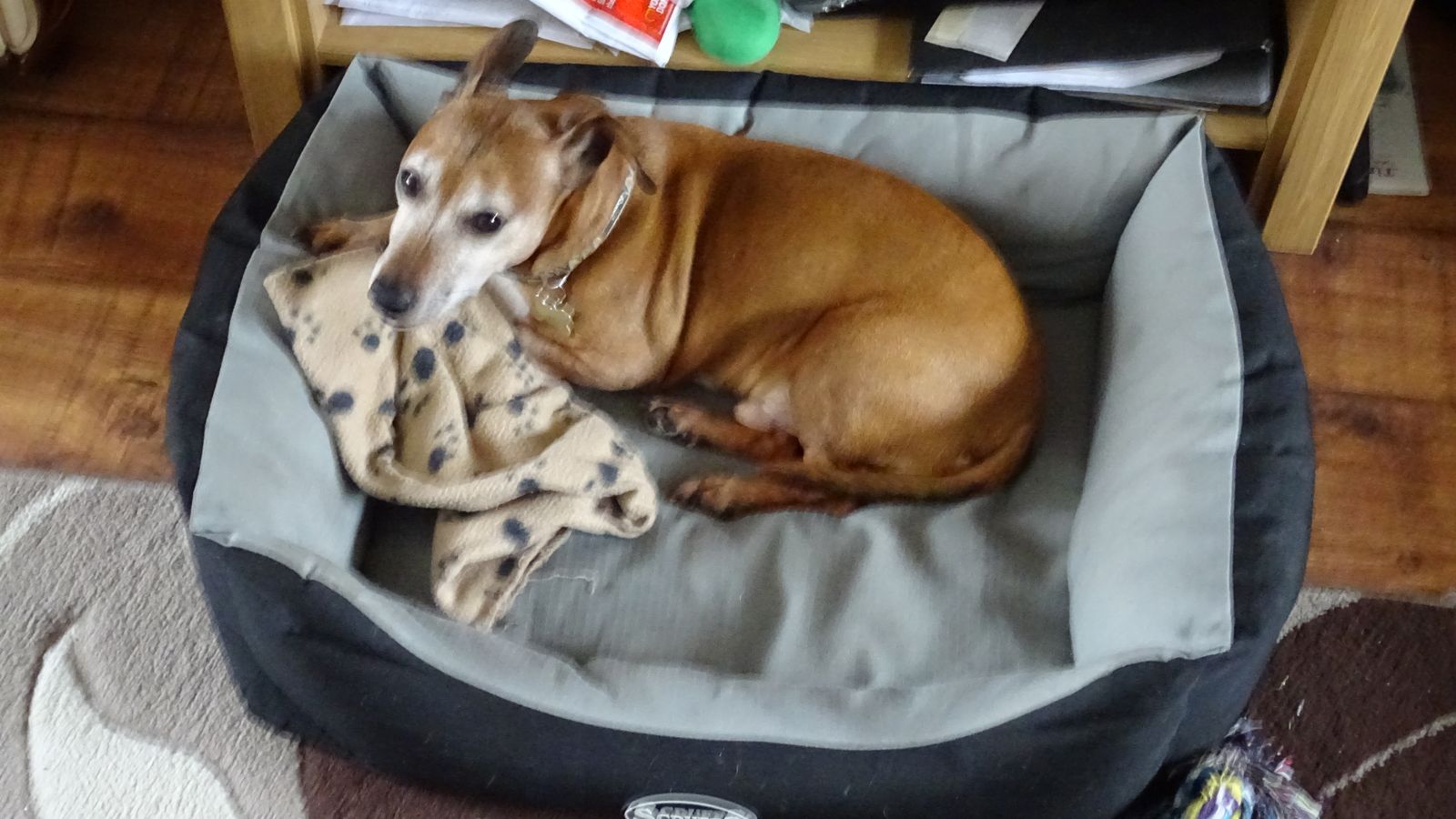
A dog bed is one of the few things your dog will use every single day, often for twelve hours or more. Yet most beds are bought on looks, and most returns happen because the bed was the wrong size or fell apart in the wash. This guide walks through the decisions that actually matter, in the order you should make them.
Step 1: Measure your dog, not the room
Wait until your dog is lying in their favourite position and measure from the tip of the nose to the base of the tail. Then add 15 cm if they curl up, or 25–30 cm if they stretch out on their side. That figure is the minimum sleeping surface you need along the longest side. Brands label sizes differently — one maker’s “large” is another’s “medium” — so always compare the stated internal dimensions, not the size name.
Dog Bed Size Guide
Measure your dog lying down in their usual position, nose to base of tail, and tell us how they like to sleep.
This tool gives general guidance to help you shop; it is not veterinary advice. Always check the manufacturer’s own sizing chart before buying.
Step 2: Match the shape to how your dog sleeps
- Curlers (most terriers, spaniels and many small dogs) feel secure in round or oval bolster beds with a raised edge to lean against.
- Sprawlers (greyhounds, lurchers, many large breeds) need a flat mattress or a rectangular bed with a low or open front.
- Mixed sleepers do well with a rectangular bolster bed that has a lower section at the front.
- Nesters and diggers like a loose-cushioned bed or a cave-style bed they can burrow into.
Step 3: Choose a filling for your dog’s age and joints
Polyester fibre
The cheapest and lightest option. Comfortable at first but compresses within months, especially under a heavy dog. Fine for puppies (who will outgrow or chew it anyway) and for a spare bed in the car.
Foam crumb or chipped foam
Mid-priced and holds its shape better than fibre. Can feel lumpy and may shift to the edges over time unless the cushion is baffled into sections.
Memory foam and orthopaedic foam
A solid slab of foam, usually 7–10 cm thick, that spreads weight and takes pressure off hips and elbows. The best choice for senior dogs, large breeds and any dog with stiffness. Check the foam density: very light, bouncy foam will bottom out under a big dog. A removable, waterproof inner liner protects the foam from accidents and extends its life considerably.
Raised or cot-style beds
A fabric mesh stretched over a frame. Cool in summer, easy to hose down and popular with dogs that overheat. Less cosy in a cold house unless you add a blanket.
Step 4: Be honest about washing
A bed cover should be removed and washed every one to two weeks (more often if your dog has allergies or has been treated for fleas). If the cover is awkward to take off, you will not do it. Look for a full-length zip, a cover that fits a domestic washing machine, and a care label that allows at least 40°C. Our separate guide explains how often to wash a dog bed and how to do it without ruining the filling.
Step 5: Think about where it will live
Dogs like to sleep where they can see the household but not be stepped over. A quiet corner of the living room usually beats a hallway. If the bed will sit on a hard floor, a non-slip base stops it skating around when your dog jumps in. In a flat, a bed that doubles as a crate mat or fits inside a crate saves space.
Common mistakes
- Buying by breed size chart instead of measuring.
- Choosing a deep, high-sided bed for an older dog who struggles to step in.
- Ignoring the cover material: smooth, tightly woven fabrics shed hair far more easily than fleece.
- Expecting a cheap fibre bed to last a heavy dog more than a season.
Frequently asked questions
How big should a dog bed be?
Measure your dog from nose to base of tail while they are lying down, then add 15 cm for a dog that curls up or 25–30 cm for one that stretches out. That is the minimum length of the sleeping surface.
Are orthopaedic dog beds worth it?
For senior dogs, large breeds and dogs with joint stiffness, yes. A solid foam base spreads weight evenly and makes getting up easier. Young, healthy small dogs do not need one.
How often should I replace a dog bed?
Replace it when the filling no longer springs back, when the base is permanently compressed where your dog lies, or when the cover can no longer be cleaned properly. Good foam beds often last several years; fibre beds rarely last beyond one.
Should a puppy have an expensive bed?
Usually not. Puppies chew, have accidents and grow quickly. Choose something washable and inexpensive for the first year, then invest in a proper bed sized for the adult dog.