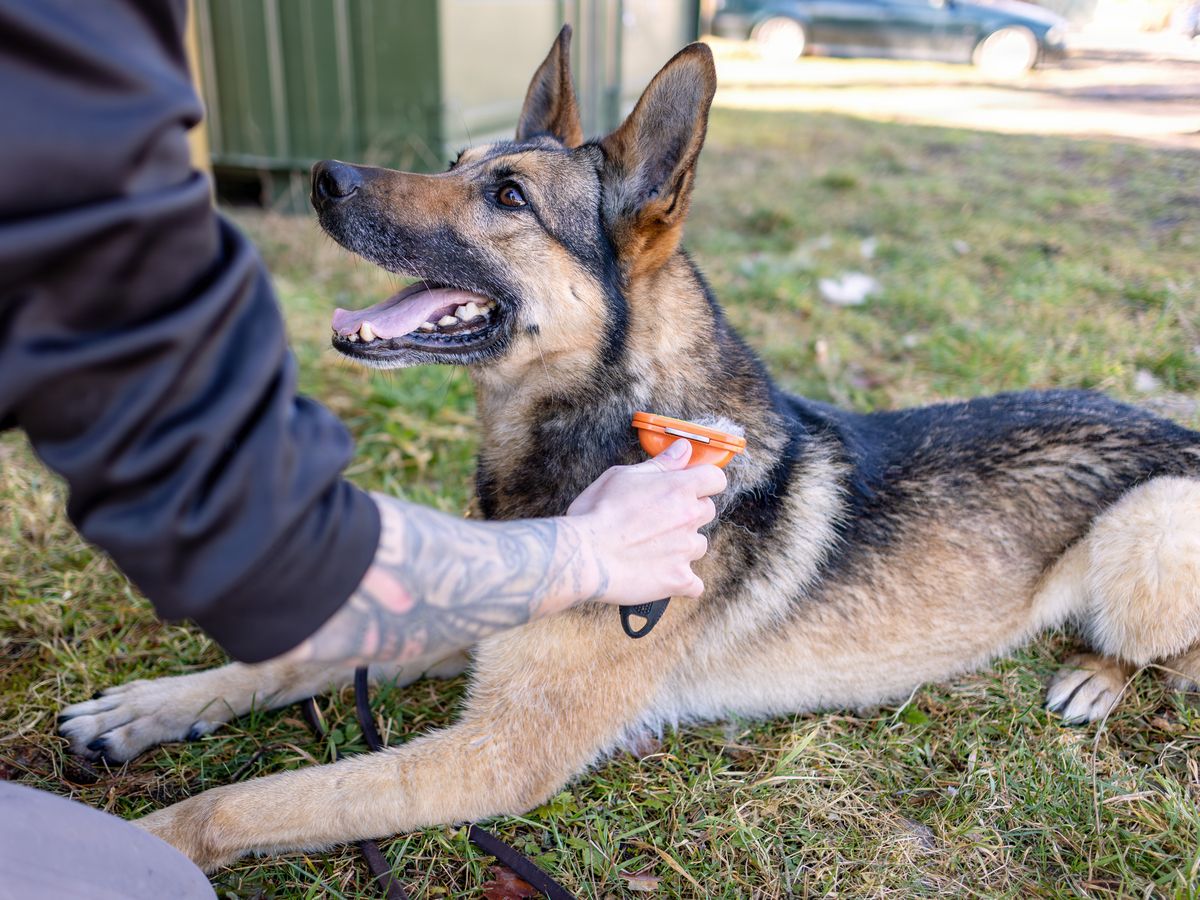
Get the crate size right and crate training is far easier: your dog has room to be comfortable, but the space still feels like a snug den rather than a small room. Get it wrong in either direction and you will either have a cramped, unhappy dog or a puppy who toilets at one end and sleeps at the other.
How to measure your dog for a crate
- Length: with your dog standing, measure from the tip of the nose to the base of the tail (not the tip). Add roughly 10 cm.
- Height: measure from the floor to the top of the head, or to the ear tips if they stand upright. Add roughly 8 cm.
- Width is rarely a problem if the length is right, but a dog should be able to turn around comfortably.
Dog Crate Size Calculator
Measure your dog standing: length from the tip of the nose to the base of the tail, and height from the floor to the top of the head (or ear tips if they stand up).
This tool gives general guidance to help you shop; it is not veterinary advice. Always check the manufacturer’s own sizing chart before buying.
Standard crate sizes and who they suit
Wire crates sold in the UK usually follow imperial sizes. Internal dimensions vary a little between brands, so treat these as a guide and check the listing:
- 24 inch (about 61 cm long): toy breeds and very small dogs such as Chihuahuas and Yorkshire Terriers.
- 30 inch (about 76 cm): small dogs such as Jack Russells, Miniature Dachshunds and Pugs.
- 36 inch (about 91 cm): medium dogs such as Cocker Spaniels, Beagles and Border Collies.
- 42 inch (about 107 cm): larger medium and large dogs such as Labradors, Boxers and most Golden Retrievers.
- 48 inch (about 122 cm): large breeds such as German Shepherds, Rottweilers and Greyhounds.
- 54 inch and above: giant breeds such as Great Danes and Newfoundlands.
Sizing a crate for a puppy
Buy the crate your puppy will need as an adult, then use a divider panel to reduce the usable space while they are small. Move the divider back every few weeks as they grow. Without a divider, a large crate gives a puppy room to toilet in one corner, which undermines house-training. Most good wire crates include a divider; if yours does not, a stiff board cut to size works.
Wire, fabric or furniture-style?
- Wire crates fold flat, have good airflow and are the easiest to clean. Add a cover if your dog prefers a darker den.
- Fabric crates are light and ideal for travel or visiting, but a determined chewer or scratcher will get through them. Best for crate-trained adults, not puppies.
- Furniture-style crates double as a side table and look good in a living room. Check the internal dimensions carefully — the stylish exterior often hides a smaller interior.
Signs the crate is the wrong size
- Your dog’s back touches the roof when standing, or they have to crouch: too small.
- They cannot stretch out on their side: too small.
- A puppy toilets inside the crate regularly: probably too big — add a divider.
- Your dog lies pressed against one end: often a sign they want a smaller, cosier space; a cover may help.
Frequently asked questions
Can a dog crate be too big?
Yes. A crate that is far larger than the dog tends to lose its den-like feel and, for puppies, allows toileting at one end. Use a divider to reduce the space until your dog is fully house-trained.
How long can a dog stay in a crate?
Crates are for short periods, sleep and travel, not all-day confinement. Puppies in particular can only hold their bladder for a limited time. If you need to leave a dog for several hours, a pen or a secure room is kinder than a crate.
Should I put a bed in the crate?
Yes, once your dog is past the chewing stage. For young puppies, use washable vet bedding or towels so accidents are not a disaster.
Do I need a crate at all?
No. Many dogs do perfectly well without one. Crates are useful for house-training, safe car travel and giving a dog a quiet retreat, but they are a tool, not a requirement.